Stategic position
Problem
Technology has made users alienated and highly partisan due to prolong digital device use.
Solution
A device that increases empathy production creating a balanced cybernetic loop between users and smartphone technology allowing for a more proactive and healthy experience.
Please note this is a speculative device and is not technologically viable.
Research
Qualitative Literature Review
Analyzes and synthesizes information from peer-reviewed journals, tech magazines and legitimate news organizations.
Design Research Goals
- Learn about behavioral psychology
- Examine cybernetic systems
- Research inventions from science fiction

Context Scenario
The Day After Tomorrow
The beginning of the 21st century was a mixture of chaotic extremes. Since the industrial revolution, technology has grown exponentially. The once-impossible became standard, and what was once magical become normal. This pattern has repeated itself over and over again, but something began to change in the early part of the century.
Scientists began to realize that digital technology leads to loss of empathy, the prime barometer of humanity’s wellness. History has shown that a lack of empathy leads to war and violence. From Ancient Rome to the warring Christians and Muslims of the Crusades, to the First Nations of the Americas, to the Jews of Europe and the people of Rwanda, a profound lack of empathy facilitated unspeakable loss.
By 2020, children began to experience neurological changes in the makeup of brain pathways with increased digital use. The pituitary gland, located near the brain stem, began to mutate. As the pituitary degraded, children began to show increased episodes of ant-social behavior and increased psychotic tendencies. School violence, once primarily located in the United States, began to spread throughout the world.
By 2030, the United Nations and the G7 Nations began to study ways to counteract the effects of digitization and empathy degradation. Violence levels across the world spiked and the global order began to collapse. By the early 2040s, Europe had fallen into decay, while military dictatorships had risen across southeast Asia. President Ivanka Trump had finished her father's dream of fortress America, and the country had completely closed off from the rest of the world. Canada and a handful of Western democracies continued to fight for Western order, but it seemed too late.
A young scientist in the Free Province of Nunavut finally made a prototype that would allow people to become more empathetic to each other and reverse the pituitary gland degradation. The Empathy Particle Accelerator (EPA) was a small device that came into use throughout the world. Within a decade, mortality rates plummeted and borders began to open again. Technology finally became a proactive means to help humanity after all the years of destruction and chaos it caused. The EPA allowed humans to become humans again. It allowed us to remember that it is in our nature to be empathetic rather than at the mercy of our digital devices.
Speculative Prototype
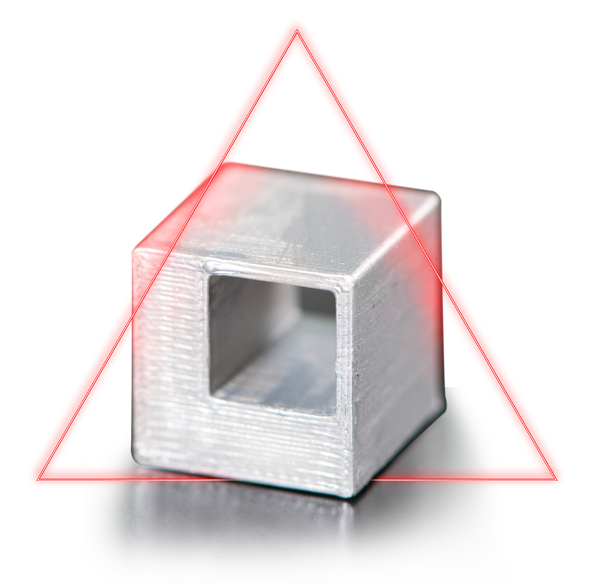
- This device picks up negative ions from the room, and turns them into positive energetic ions which power the MVFEC.
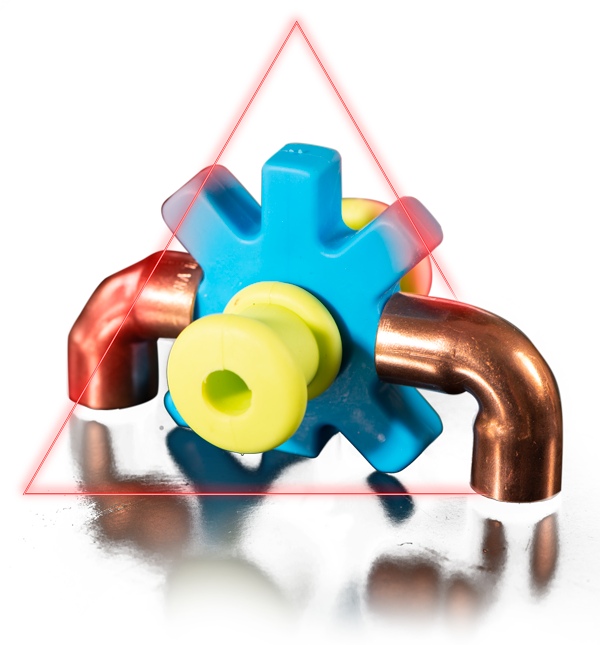
- The most powerful feature of this device, as it spins it creates a magnetic field that focuses on oxytocin molecules in its medium range. It triggers the pituitary gland to secrete this hormone, which in turn causes a feedback mechanism creating increased empathy and happiness in users.
- This measures the amount of empathy in a room or region by analyzing the amount of oxytocin molecules upon individuals and groups.
- This takes the binary data from the Chip Reader and places it into the Central Processing Unit (CPU) for data analysis.
- The Central Processing Unit analyses the data for activation and deactivation.
- This grounds EPA, preventing a short circuit.
- The Central Processing Unit analyses the data for activation and deactivation.
- This is a massive database in which users’ genomes are sourced for individual genetic markers to help generate oxytocin in users.
EPG / Electron Particle Gather
MVFEC / Magnetic Vacuum Force Emitter Cube
Oxytocin Chip Reader
Advanced Fibre Optic Electrical
CPU
Rubber Insulator
Transparent Metallic Sheild
Random Access Wafer Scale Engine
