
Stategic position
Problem
Patients are often left isolated and alone in hospital settings causing ICU psychosis creating burdens on the hospital system.
Vision
Use augmented reality to help patients connect with family during periods of isolation to help cope with isolation and loneliness combatting psychosis.
Research
Personal Story of ICU Psychosis
Research for this prototype is personal and subjective given it comes from my experience in the hospital ICU. After respiratory failure due to muscle exhaustion in my thoracic cavity, I required intubation for several months. I was given a cocktail of painkillers and antipsychotics to sedate me. Unfortunately, there was a terror attack in Toronto and I was moved to a burn unit. During my isolation, I was unable to see family members to protect burn patients from infection. All nurses and doctors had to wear hazmat suits in that unit. During my isolation, I became increasingly alienated, paranoid and defensive due to the mixture of drugs, handcuffs and a hostile hospital environment causing temporary ICU psychosis.
Personal Experience Pain Points
- Bordom
- Isolation
- Misplaced anger against hospital staff
Cinema Prototype
Research for this prototype is personal and subjective given it comes from my experience in the hospital ICU. After respiratory failure due to muscle exhaustion in my thoracic cavity, I required intubation for several months. I was given a cocktail of painkillers and antipsychotics to sedate me. Unfortunately, there was a terror attack in Toronto and I was moved to a burn unit. During my isolation, I was unable to see family members to protect burn patients from infection. All nurses and doctors had to wear hazmat suits in that unit. During my isolation, I became increasingly alienated, paranoid and defensive due to the mixture of drugs, handcuffs and a hostile hospital environment causing temporary ICU psychosis.
Personal Experience Pain Points
- Bordom
- Isolation
- Misplaced anger against hospital staff
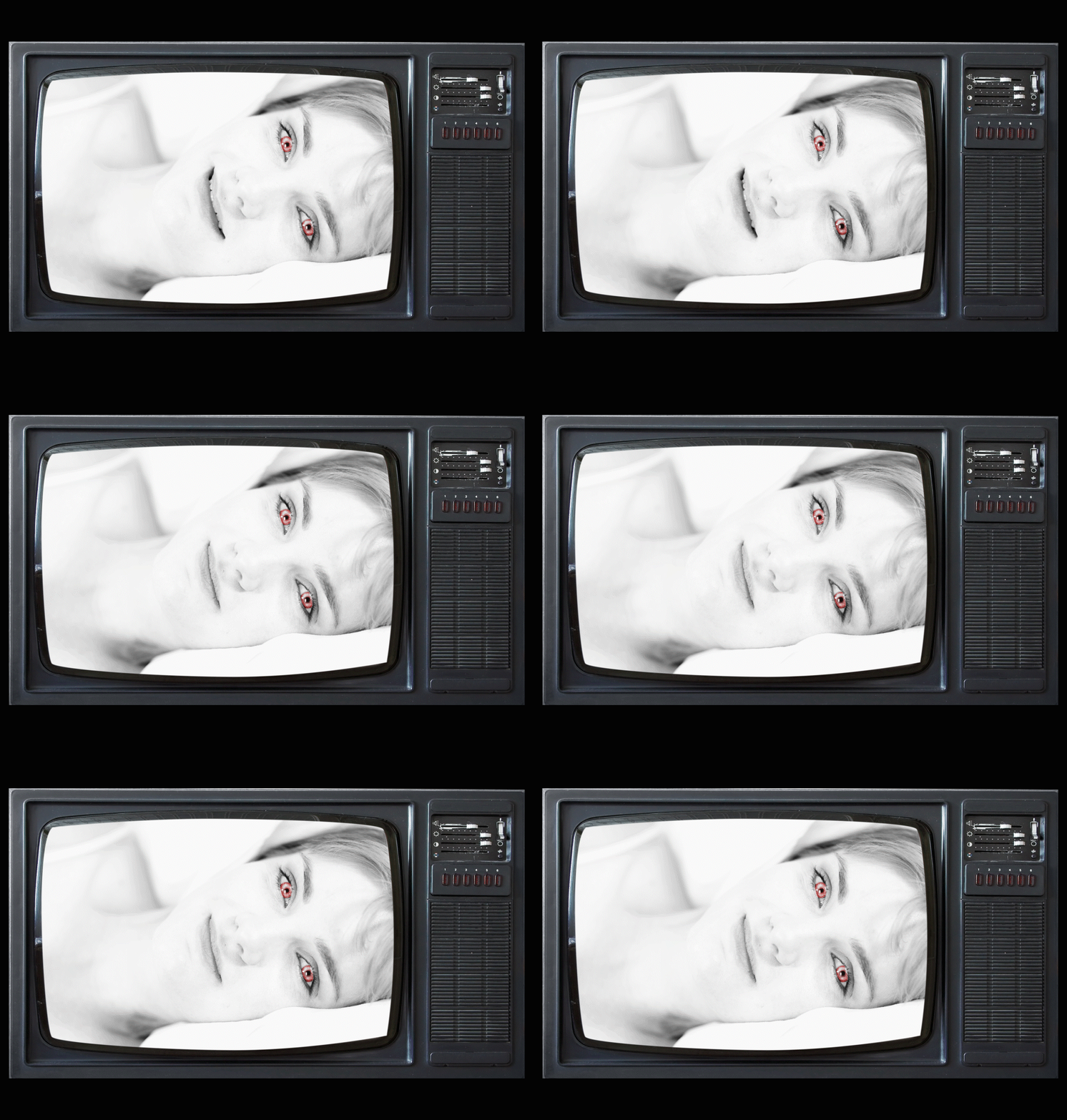

Cooperative Modeling
Design Mode
Keeping patients comfortable during periods of stress helps patients, families and doctors. The prototype will help users and families by increasing patient quality of life when dealing with isolation.
Creating an augmented reality that responds to a patients stress hormones is infusion of good design and medicine. It is completely non invasive, meaning the side effects are negligible. It could only improve a patients hospital stay, creating a safer environment for he patient, hospital staff and family members.
Business Mode
Further research is needed, but the US spends over 3.6 billion on Health Care. Long-term care costs are skyrocketing in every developed nation as patients are living longer due to the natural progression of technology and medicine. Keeping patients comfortable by lowering stressors will help keep costs down through proactive care.
It could only improve a patients hospital stay, creating a safer environment for he patient, hospital staff and family members. Furthermore, by lowering stress hormones, we can actually improve a patients health and well-being. I would also argue that the cost of giving patients these Enhanced-Augmented Smart Lens (EASL) would be offset be shorter hospital stays.
Technological Model
Augmented reality (AR) and virtual reality (VR) are being developed by the biggest tech companies such as Facebook and Google.
Interface
Short Film Prototype
Please note due to the COVID-19 pandemic, this film is still in production. However, an assembly cut is available to view. Currently awaiting ADR to complete the film.
Prototype
- Enhanced-Augmented Smart Lens (EASL) will monitor patients stress hormones
- The augmented reality will be user-specific, therefore the graphics will be based on the user's personal life experience, to counteractive the hormones of stress.
- AR will be regulated by hormonal biomarkers to create a feedback mechanism
- COVID-19 Assembly Edit
Stress Hormone Reader
AR Response to those Biomarkers
Cypernetic Regulatory Loop
LINK TO ASSEMBLY EDIT